

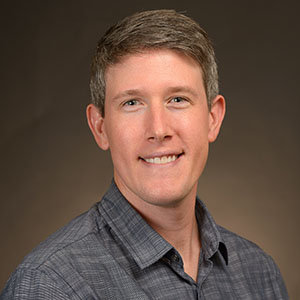
As depression rates across the nation surge amongst mothers, Associate Professor Kit Elam, Ph.D., in the Department of Applied Health Science is on the forefront of research determining the cause—and appropriate supportive solutions—to aid these families.
Elam and his team were awarded a National Institutes of Mental Health R01 grant in the amount of $3,792,108 R01 for the five-year project "Prevention of Maternal Depression across 25 years in the Context of Sociocultural Risk and a Randomized Parenting Intervention".
The research draws on an existing data set of a multisite intervention-based study where families of children starting at age two have been assessed over the course of the last several years. The children are now aged 24, and this current study aims to return to these mothers and see how their stress factors have changed over time. The three sites for study are Eugene, OR for the suburban sample, Pittsburgh, PA for the urban sample, and the outskirts of Charlottsville, VA for the rural sample.
"We have mother data on nearly 25 years of depression, and not only that but other aspects of mom’s functioning day-to-day," says Elam, who is Principal Investigator (PI) and Project Leader. "Things like neighborhood and social support, financial support and strain, provide a rich examination of predictors and factors that might underlie mom’s depression across this life course."
A relative newcomer to this project, Elam is excited to be working with seasoned fellow PIs Daniel Shaw, Ph.D., at the University of Pittsburgh, Erika Westling, Ph.D., at Oregon Research Institute, Kathryn Lemery-Chalfant, Ph.D., at Arizona State University, and Jazmin Brown-Iannuzzi, Ph.D., at University of Virginia, many of whom have been with this research project since the beginning.The project will start with returning to the families involved in the initial study and re-enrolling them for a new assessment, with a goal of having the first batch of participants assessed by the end of the first year. Elam says the study includes a diverse sample, including white, Black, African American, LatinX and Hispanic participants.

"We are working on developing a ‘daily hassle scale’ that asks what the hassles are when caring for others or just in the house, how chaotic is the home life and what is the quality of the home environment," says Elam. "My hope and goal for this is to identify what targetable mechanisms we can promote in disadvantaged families to help women and their families be resilient against depression."
Elam says many of these women, who range from mid-40s to mid-60s, are now part of the “sandwich generation”—meaning they are simultaneously taking care of elderly parents and their own children and even grandchildren. These numerous responsibilities, Elam mentions, can have major impacts on mental and physical health, as well as relationships with their family members.
"An important nuance to think through and study within these complex family dynamics is what are the aspects of resilience?" says Elam. "What kind of social support networks do they have? This could be individual coping mechanisms in daily life such as going out for coffee, or getting physical exercise. We want to know what promotes resilience at this stage of life."
For more inspiring stories about SPH-B students, faculty, and staff making a difference, visit go.iu.edu/48bx.